
Unlock the full DNA of your components with non-destructive 3D X-ray inspection. From microscopic defect detection to high-speed metrology, we provide the clarity you need to innovate with confidence.
Industrial Computed Tomography (CT) scanning is the ultimate diagnostic tool for modern manufacturing. By utilizing advanced X-ray technology, Wenzel’s CT systems capture 360-degree data to reconstruct a complete 3D volumetric model of your part. Unlike traditional coordinate measuring machines (CMMs) or surface scanners, CT scanning allows you to see both the internal and external geometries simultaneously without damaging the component.
At Wenzel, we bridge the gap between non-destructive testing (NDT) and high-end metrology. Our systems don’t just show you what’s inside; they provide traceable, high-resolution data that can be used for “Virtual CMM” inspections, wall thickness analysis, and CAD-to-part comparisons. Whether you are validating a complex 3D-printed lattice or inspecting a multi-material assembly, our CT services provide a “digital twin” that reveals every hidden detail.
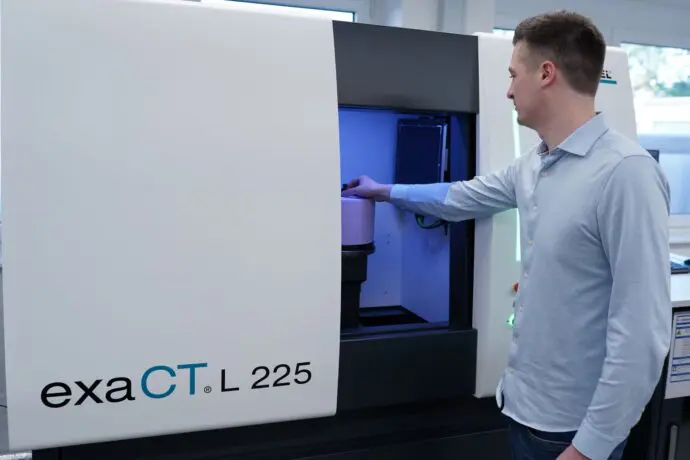
The primary advantage of Industrial CT scanning is its ability to perform comprehensive internal inspections non-invasively. This eliminates the need for costly and time-consuming “sectioning” or destructive testing. By visualizing porosity, inclusions, and assembly misalignments in a virtual 3D space, engineers can identify the root cause of failures faster than ever before. This significantly accelerates the R&D cycle and ensures that only 100% compliant parts reach your customers.
Furthermore, Wenzel’s CT technology streamlines the quality assurance process by capturing millions of data points in a single scan. Traditional tactile probing can take hours to measure complex internal features; our CT services do it in minutes. This speed, combined with the ability to distinguish between different material densities, makes it an invaluable asset for reverse engineering and first-article inspection (FAI), providing a level of insight that optical or contact-based methods simply cannot match.
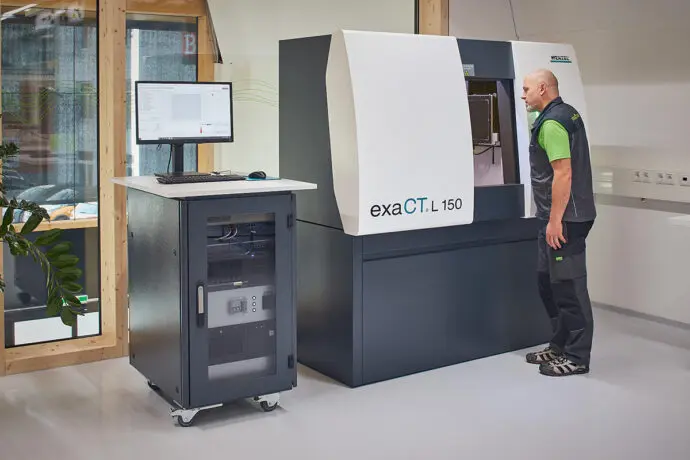

Utilizing our heritage in CMM manufacturing, our CT systems feature granite components for superior thermal stability and vibration damping.

Unlike closed proprietary ecosystems, Wenzel’s WM | Quartis and PointMaster software integrate easily with third-party tools and existing workflows.

Detect micron-level defects and microscopic cracks that are invisible to standard X-ray systems.

Our exaCT series offers one of the most compact power-to-size ratios on the market, perfect for both labs and shop floors.

Perform full GD&T (Geometric Dimensioning and Tolerancing) on internal features that are unreachable by physical probes.

From auto-optimization of scan parameters to 24/7 sample changers, we reduce human error and maximize throughput.
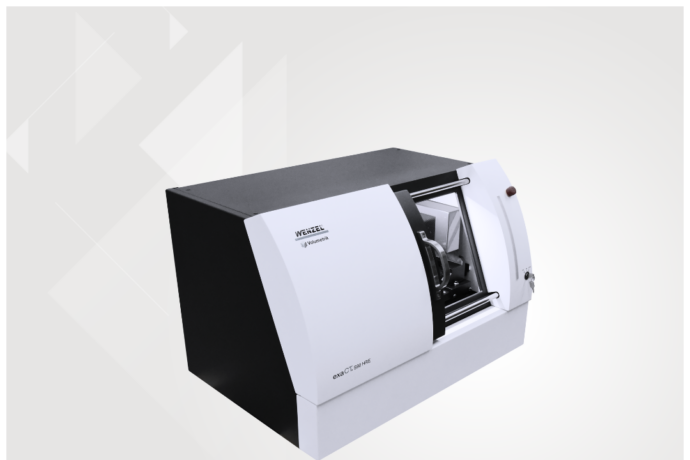
The exaCT S is a modular system concept with exceptional system stability and can be perfectly integrated into existing measurement rooms. The compact size of the system associated with precision mechanics and the innovative detector technology are the foundation for the systems excellent stability.
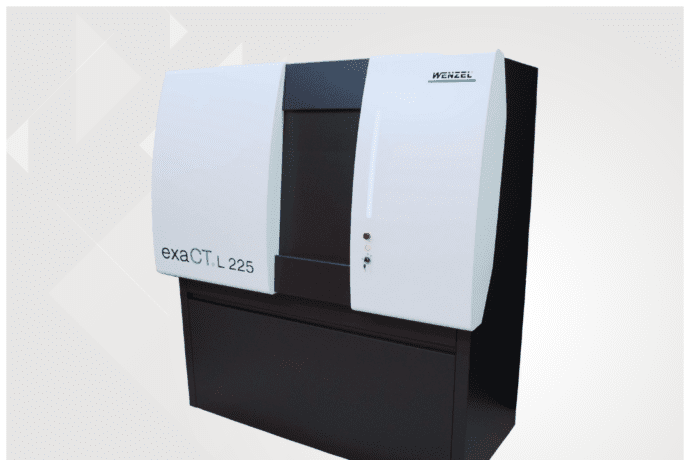
The fast and powerful exaCT L is ideally suited for measuring and inspecting parts made of plastic, light metal, composite materials or multi-materials very high detail resolution with minimal scan time. Software, service, consultation and training are also integrated. This machine is top performing and the integrated application software is very user friendly.
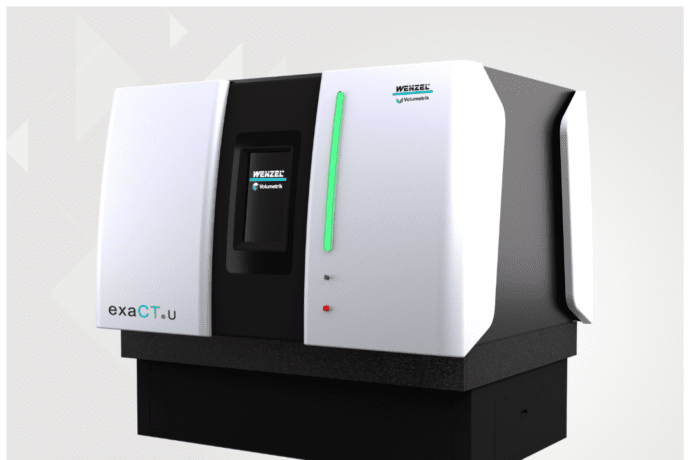
The exaCT U is the new generation of industrial computed tomography. This machine can be used universally and is designed in such a way that each customer can tailor his individual system with the appropriate X-ray source and detector. Precise measurements can also be generated after a short training period.
Scannability depends on material density and size. While we excel with plastics, composites, and light metals (like aluminum), denser materials like steel may require higher-energy sources. If it fits in our scan envelope, we can likely provide a high-resolution 3D reconstruction.
Depending on the required resolution and material, a quick 2D radiographic “pass/fail” check image can take less than a minute, while a full 3D CT scan can take as little as 20 minutes (e.g. plastics), to several hours for ultra-high-resolution metrology on dense objects (e.g. dense metal).
For many applications, yes. CT scanning is faster for complex geometries and provides internal data a CMM can’t reach. However, for ultra-high precision (sub-micron) of large external surfaces, a traditional Wenzel CMM may still be the primary tool. Often, the two are used together for a complete quality strategy.
Yes. The X-ray energy levels used in industrial CT do not “activate” or damage common industrial materials like plastics, metals, or composites. It is a 100% non-destructive process.